

Will Salesforce Survive the Age of AI?
The debates are raging, here are both sides.

In the past few weeks, I’ve had a number of discussions about the future of Salesforce. As the dominant CRM company and the prototypical SaaS business, it provides a great forum for exploring the impact of AI on the technology industry.
These discussions inevitably turn into two different points of view:
Salesforce is doomed.
Salesforce will win.
It’s interesting that there are rarely any opinions in between! Here are all the arguments I’ve heard on either side, what they tell us about the future and my personal opinion at the end.
Salesforce is Doomed
Is Salesforce doomed? Here are the arguments for its demise.
Argument 1: Integrations no longer have value.
Why have no other companies been able to challenge Salesforce’s dominance in CRM? One reason is that Salesforce aggressively acquires any potential competitors, but it’s largely about integrations. Companies use Salesforce because it integrates with everything else, and in many cases has the only integrations. That was valuable when integrations were hard, expensive and valuable.
Today, AI codegen can build an API integration in minutes. Even better, it can use browser agents to create integrations to systems without any API by logging into their web interface. That means that integrations are no longer valuable, or even an effective moat.
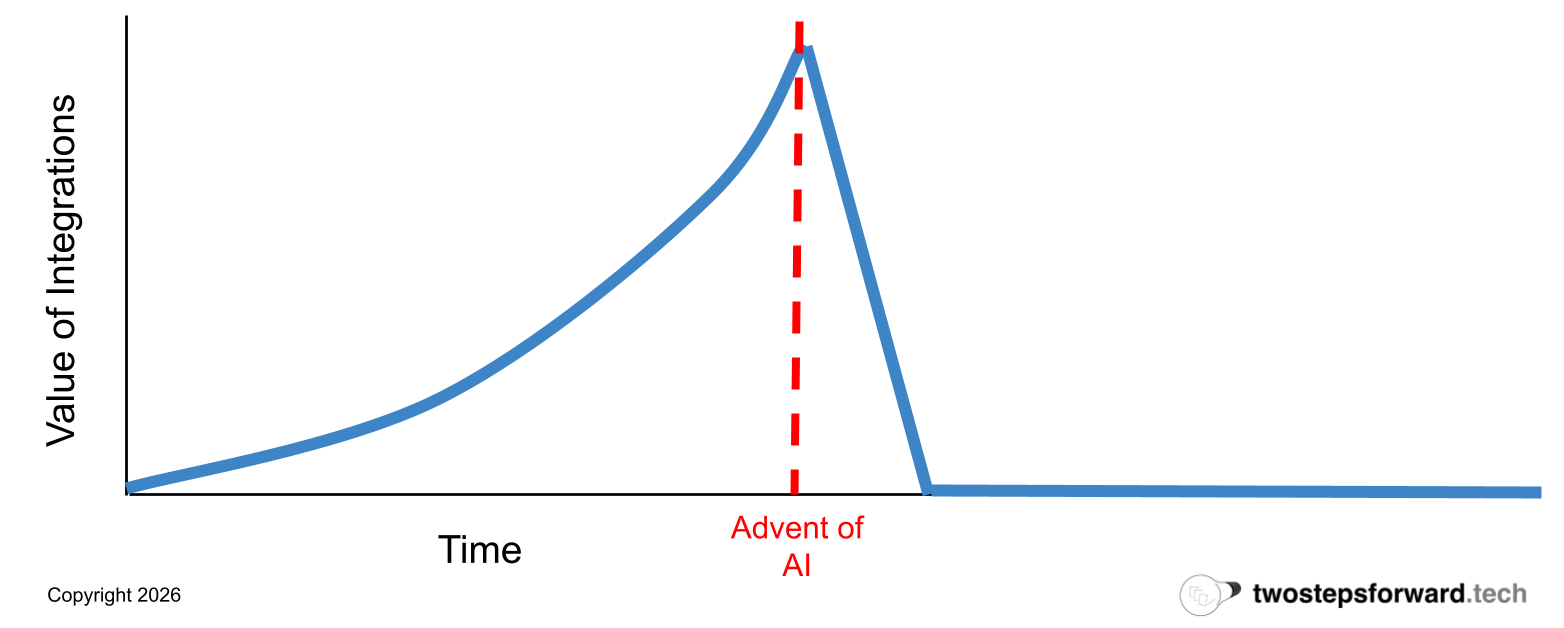
Without that key advantage and lock-in, customers no longer have the most important reason to choose Salesforce.
Argument 2: The value of packaged software will plummet.
For many years, companies had to contort themselves to fit how software worked. Regardless of how you wanted to run your business, you needed to fit into how platforms like Salesforce worked. Yes, you could spend time and money customizing it but that only went so far.
Now, companies no longer have to settle. They can build tools that fit exactly how they work best, even if it’s different from every other company. The infinite flexibility vastly outperforms the limited customization available in Salesforce.
This is true of most legacy SaaS software. Instead of a one-size-fits-all model, companies can have what they want, when they want it. The advantage of SaaS companies to sell the same product to everyone for a high margin is now a liability.
Even worse for Salesforce, their business model relies on charging a premium price. That makes it hard for them to compete with AI codegen solutions that are perfectly customized and will cost less than the hefty Salesforce price tag. Other SaaS solutions with lower prices might be able to adjust, but not Salesforce.
Argument 3: People hate Salesforce.
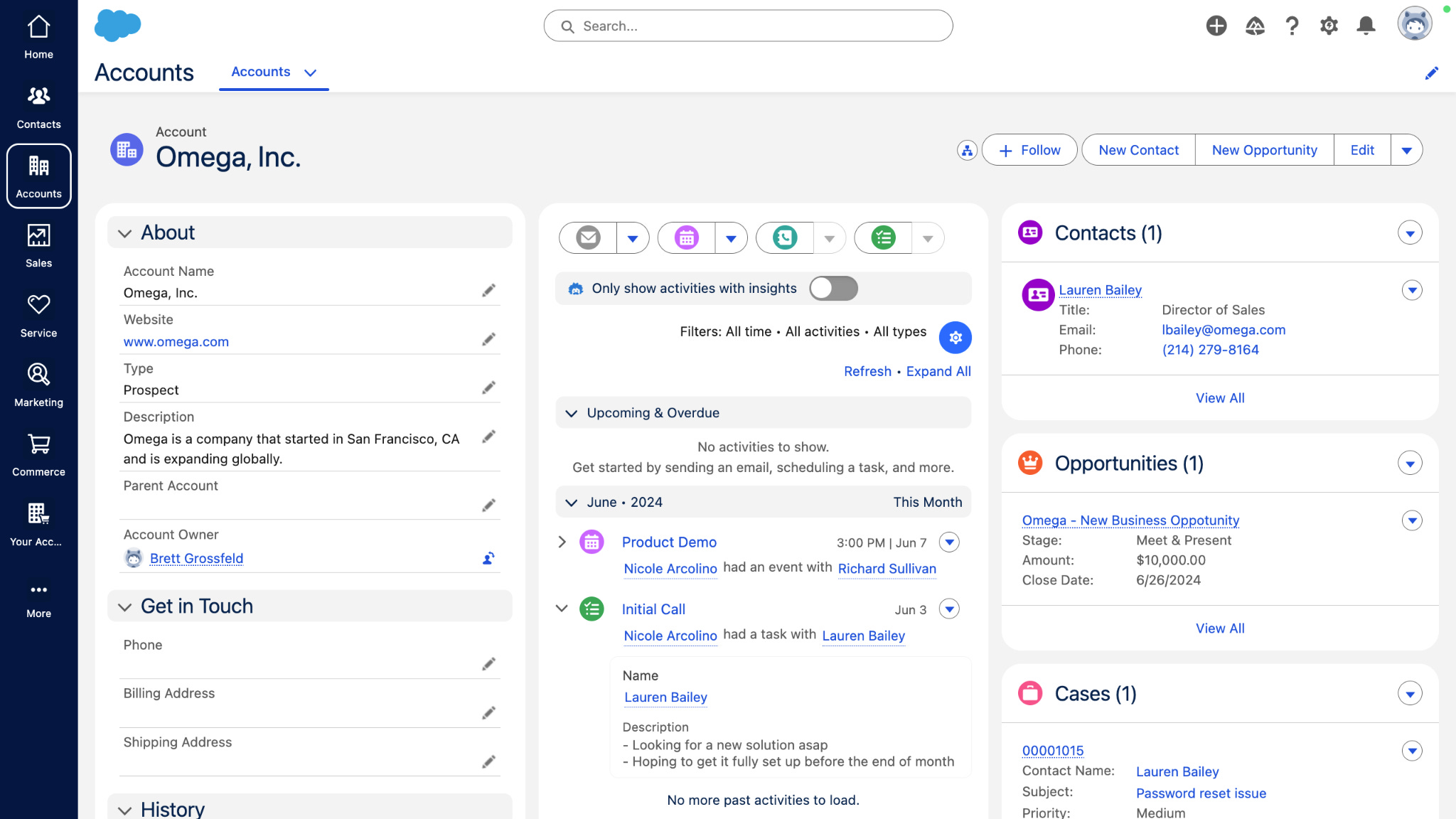
While widely used, Salesforce is largely disliked. In fact, it’s hard to find a more widely used product with such a low customer satisfaction score (except for NetSuite). The interface is hard to use, hard to learn and very unforgiving if you make a mistake. I don’t know of any Salesforce customer who doesn’t pay for someone to manage it for them full time.
Even before AI, Salesforce was losing market share to Hubspot. While Hubspot has plenty of its own problems, the eagerness to switch to another solution is a serious warning sign for their business.
Why do people still use it? There are few alternatives and the lock-in is strong. Salesforce requires so much configuration that it’s hard to migrate everything to a new system, even if they made extracting your data easy.
AI not only allows customers to build their own CRM, exactly as they want it, it lets them migrate off of Salesforce using agents.
Salesforce will win in AI
Can Salesforce win in the age of AI? Here are the arguments for its continued success.
Argument 1: Systems of record will persist.
The first and most important role of software in business was to manage information. Providing a centralized location for the most important information about a business, and keeping it up to date, was why software revolutionized how businesses operate.
That is still true today! For example, a business needs to have a single accounting system to understand how much money it is making, spending and keeping. The primary systems where this information lives are called “systems of record” and they are the most valuable software any company uses. Salesforce is the system of record for customer information for most of its customers.
Changing a system of record is more than just software, it involves the people and processes of the business. It can take years to fully migrate from one system of record to another if you include the time to migrate, train and test.
That makes systems of record like Salesforce extremely sticky and hard for companies to move off.
Argument 2: AI still requires maintenance.
Building software has historically been extremely expensive and time consuming. That cost was spread between the initial build of the product and the maintenance that keeps it working. AI makes the initial build almost trivial, but does it help with the maintenance? We don’t yet know.
If the AI cannot handle the maintenance for you, then you still need someone to do it for you. That is exactly what software companies like Salesforce specialize in, as evidenced by how long it’s been since the Salesforce CRM product has changed. They have teams dedicated to keeping their systems up, recovering from incidents and constantly upgrading the plumbing.
Even if the AI can handle the maintenance, someone needs to oversee it. That’s easy for technical companies, but non-technical businesses might not have anyone on their staff to do so. They will remain with companies like Salesforce who provide them both with software and technical expertise.
Argument 3: Armies of people are trained on Salesforce.
The people who use Salesforce everyday are the sales, marketing and customer employees managing the customer relationships it contains. These people are not software engineers and, while good at their jobs, are not all great at learning new technologies.
Salesforce has been dominant for so long that these folks have been trained on Salesforce and know it well. It is hard and expensive to retrain them on something else, and there is no guarantee they will reach the same level of expertise that has come with Salesforce.
There are around 20 million people with Salesforce training and certification, which is an amazing number.
Most companies do not want to take on unnecessary risks, so if their team knows Salesforce that can be reason enough to stick with it. It also means new employees can ramp up faster as they are using a tool they already know from their previous job.
This forms a self-reinforcing network effect where companies use Salesforce because other companies use Salesforce. That kind of barrier is hard for anything to overcome.
The Bottom Line
If you step back, the arguments against Salesforce all look forward at how things will change with AI and the arguments in favor look backwards at the way things were. It’s a common problem with AI debates today, as some folks are looking ahead and others are looking behind.

Why the divide? The tech industry is run by people with decades of experience who don’t want to admit that experience is now obsolete. People with less experience find it easier to look forwards, as they aren’t relying on the trends of the past to continue.
But when we debate these things today, they overlap enough to be different points of view. It’s true that the future might change the rules but it’s impossible to know. It’s possible that the trends of the past continue! This is why it’s a debate.
Speaking of which…
What’s my take?
To be honest, in all of these discussions I have been on the side of Salesforce’s fall. Even without AI, they have been losing market share to Hubspot due to poor customer satisfaction, an aging technology platform and an aggressive pricing strategy.
I already see many companies building their own CRMs using AI codegen, as they can better fit their workflow with a custom solution. The value of Salesforce integrations goes to zero when AI can build integrations in seconds, and use agents to create integrations into other systems that don’t even have APIs. Yes, sales teams are trained on Salesforce but your AI codegen can create an interface similar enough that they pick it up quickly.
I also reject the argument about “systems of record” because it assumes a certain way of operating a business. It’s not clear that the model will survive the rise of AI agents and even if it does, the shape these systems take will change radically.
The good news for Salesforce is that they have diversified their business and do a lot more than CRM now. Some of those other businesses will hold them up as growth disappears from the CRM business, especially the AI products.
But I wouldn’t make a long term bet on their prospects right now. The Age of AI is coming for the core of the technology industry and changing the rules every day. The innovator’s dilemma is in full effect.
I was in the CRM industry for more than 30 years as a Reseller, Consultant, and Independent CRM Analyst. Salesforce.com has run its course, like virtually every product eventually does. It won't go away anytime soon, but, like Siebel Systems before it, it will eventually disappear.
Siebel went away when cloud computing took over from Client/Server and Salesforce.com will go away because it was built for a different time... a time before AI. Siebel tried to create a cloud solution, but failed. The same will be true for Salesforce.com
How many examples can you point to when a company was successful when it virtually had to start all over with a completely different business and product model to succeed?
I'm an old dude, so I'm aware that the arguments for Salesforce.com surviving, or not, are reminiscent of the arguments that were held back in the 90s about Siebel when cloud computing started to take over.
We've entered a different computing era. The products created for the previous era will be replaced by new products created for the current AI era in fairly short order.
Bye-bye Salesforce... it was nice while it lasted.